FourFeetz Production Story · Production Guide
HARU and LUNA by the Rainy Window: Making a 23-Second AI Pet Film
A behind-the-scenes look at preserving real pet features while fixing ear deformation, synchronized movement, and an unexpected extra animal in a short AI pet film.
Production Record
Based on original FourFeetz project frames, test clips, and published work.
Quick verdict
The most reliable result came from separating fixed identity traits from flexible atmosphere, giving HARU and LUNA different reaction timing, and replacing narrative cues with concrete on-screen constraints when unwanted elements appeared.
FourFeetz production notes
Separating Atmosphere From Identity
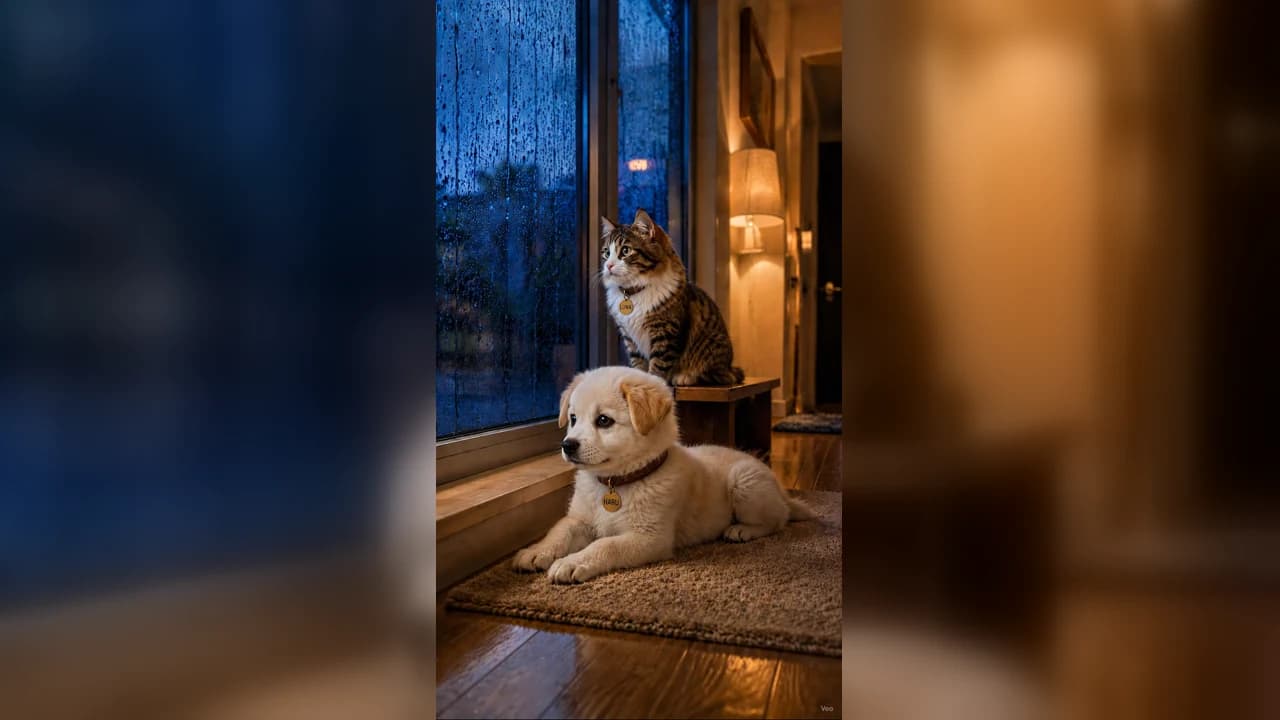
This vertical 23-second film shows HARU and LUNA quietly watching the rain on a warm evening. The finished scene looks simple, but preserving the two pets’ recognizable features while giving them natural, independent movement required several rounds of revision.
The first concept image had the mood we wanted: rain running down the glass, a cool blue exterior, and warm amber light inside. However, the animals did not look enough like the real HARU and LUNA. A later version followed the reference photos more closely but lost some of the cinematic atmosphere.
We solved this by separating the requirements. The original image guided the lighting, composition, and color. The reference photos guided facial structure, fur markings, ear shape, collars, and body proportions. Both animals were made smaller within the room, especially LUNA, and the name tags received stronger size and contrast.
The practical lesson was that ‘use the reference image’ is not precise enough. Stable features and flexible scene elements need to be identified separately.
FourFeetz production notes
One Small Instruction Changed HARU’s Ears
An early prompt asked HARU’s ears to react slightly to a sound. The generated motion was exaggerated, making his naturally soft, folded ears stand upright. We removed the ear action and explicitly required the ears to remain floppy, folded downward, and unchanged throughout the shot.
When a body part defines a character’s identity, even a small movement request can become a visible design change. Keeping that part still was more reliable.
FourFeetz production notes
Synchronized Reactions Looked Artificial
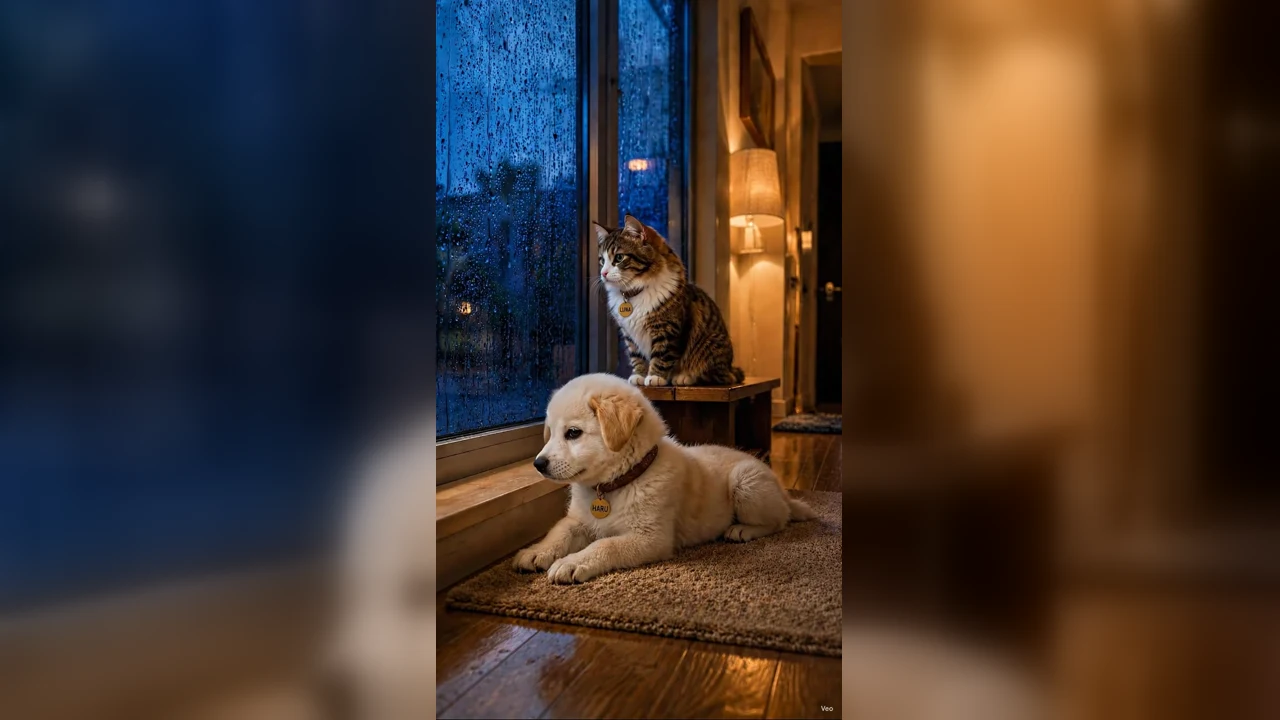
At first, both animals reacted to the same off-screen sound ‘together.’ The model interpreted that literally: their faces moved at the same speed and through nearly the same angle.
We redesigned the timing. HARU looked right with his eyes before making a small head turn. About one second later, LUNA blinked and shifted only her gaze. Giving each pet a different start time, speed, and movement range produced a more believable result.
- 1HARU looks to the right with his eyes before making a small head turn.
- 2About one second later, LUNA blinks and shifts only her gaze.
- 3Each pet receives a different start time, speed, and movement range.
FourFeetz production notes
A Story Cue Created an Unexpected Third Cat
The most surprising error was a new cat walking in from the hallway. Describing an entryway and an owner returning home encouraged the model to visualize a new arrival.
The revised prompt removed most of the narrative and defined only visible constraints: exactly two animals, an off-screen sound with no visible source, an empty and motionless hallway, and no new person, animal, silhouette, or reflection.
This showed us that emotional story language is not always helpful during troubleshooting. When an unwanted element keeps appearing, concrete screen conditions are more effective than additional narrative detail.
- Keep exactly two animals in the scene: the existing HARU and LUNA.
- Place the sound off screen without showing its source.
- Keep the doorway and hallway empty and motionless.
- Do not introduce a person, animal, silhouette, or reflection.
FourFeetz production notes
A Quieter Ending Worked Better
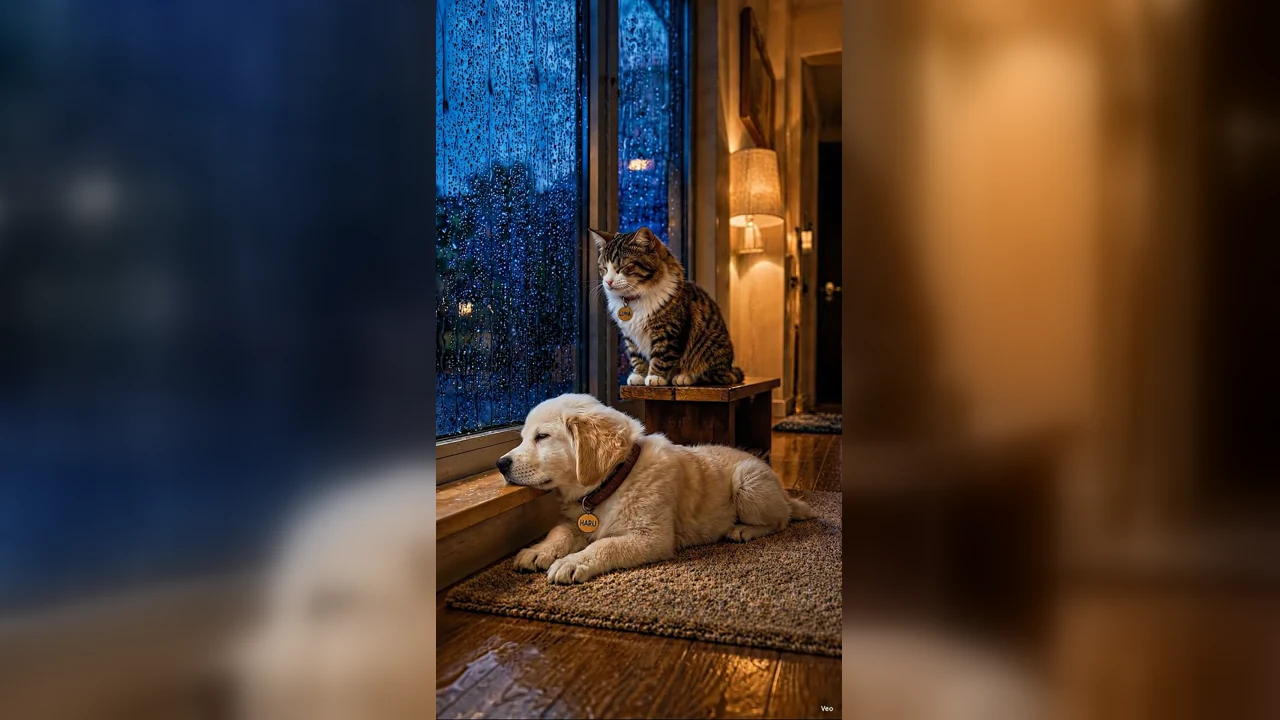
We first tried to make both animals fall asleep. Their near-simultaneous posture changes felt mechanical. In the final version, only HARU lowers his head and closes his eyes. LUNA stays seated on the bench, preserving a more natural contrast between the two characters.
FourFeetz production notes
Practical Rules From This Production
This small rainy-window film became a useful test of what it takes to keep real pets recognizable in motion. At FourFeetz Studio, the final image matters, but so does the careful iteration behind it—turning a pet photograph into a quiet memory that feels personal and believable.
- Separate fixed identity traits from flexible scene direction.
- Avoid unnecessary movement in ears, tails, or other shape-sensitive areas.
- Do not give multiple characters the same action at the same time.
- Specify different timing, speed, and range for each character.
- Suggest off-screen events with sound or light while strictly limiting entrances.
- Restart from a stable source frame instead of extending a clip that already contains an error.
- A fixed camera and fewer actions make faces and proportions easier to preserve.
FAQ
Questions creators ask us
Why did HARU’s ears change during generation?
A small ear-reaction instruction was exaggerated into an identity change. Removing that motion and holding the naturally folded ear shape was more reliable.
How did FourFeetz make two pets react more naturally?
HARU and LUNA received different start times, speeds, and movement ranges instead of reacting together with the same head motion.
How was the unexpected extra cat removed?
The narrative about an arrival was replaced with visible constraints: exactly two animals, an empty hallway, an off-screen sound, and no new figure or reflection.