
FourFeetz Scene Planning · Production Notes
From First Image to Final Short: How FourFeetz Plans a Character Scene
A real FourFeetz scene-planning walkthrough: choosing a reference image, defining one action, protecting composition, and assembling the approved result into a finished short.
Production Record
Based on original FourFeetz project frames, test clips, and published work.
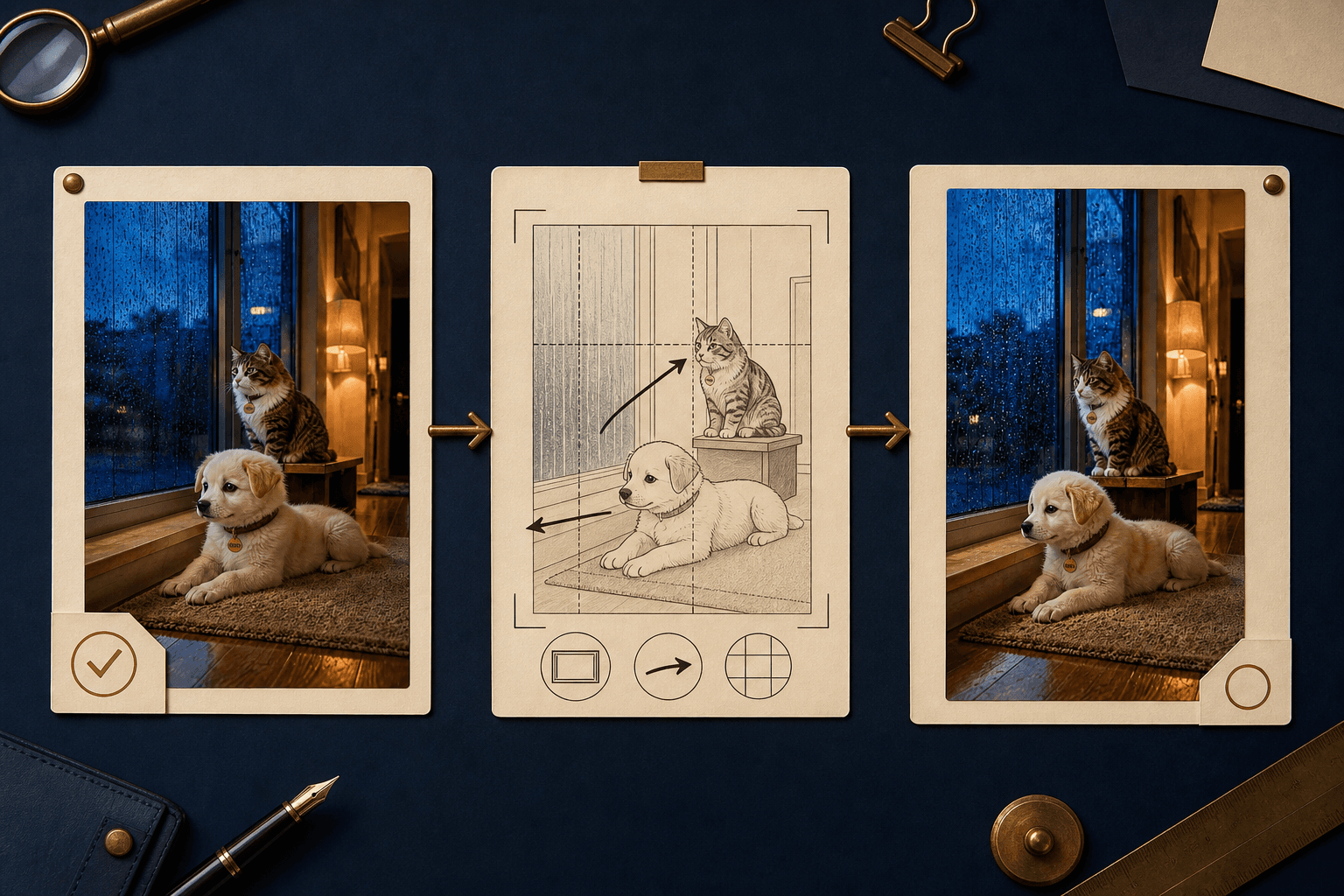
Quick verdict
FourFeetz plans a short backward from its scene purpose. An approved reference establishes identity and composition, one action keeps motion reviewable, and the edit decides whether the generated clip actually belongs in the finished story.
FourFeetz production notes
What We Tested: Starting With Purpose, Not Motion
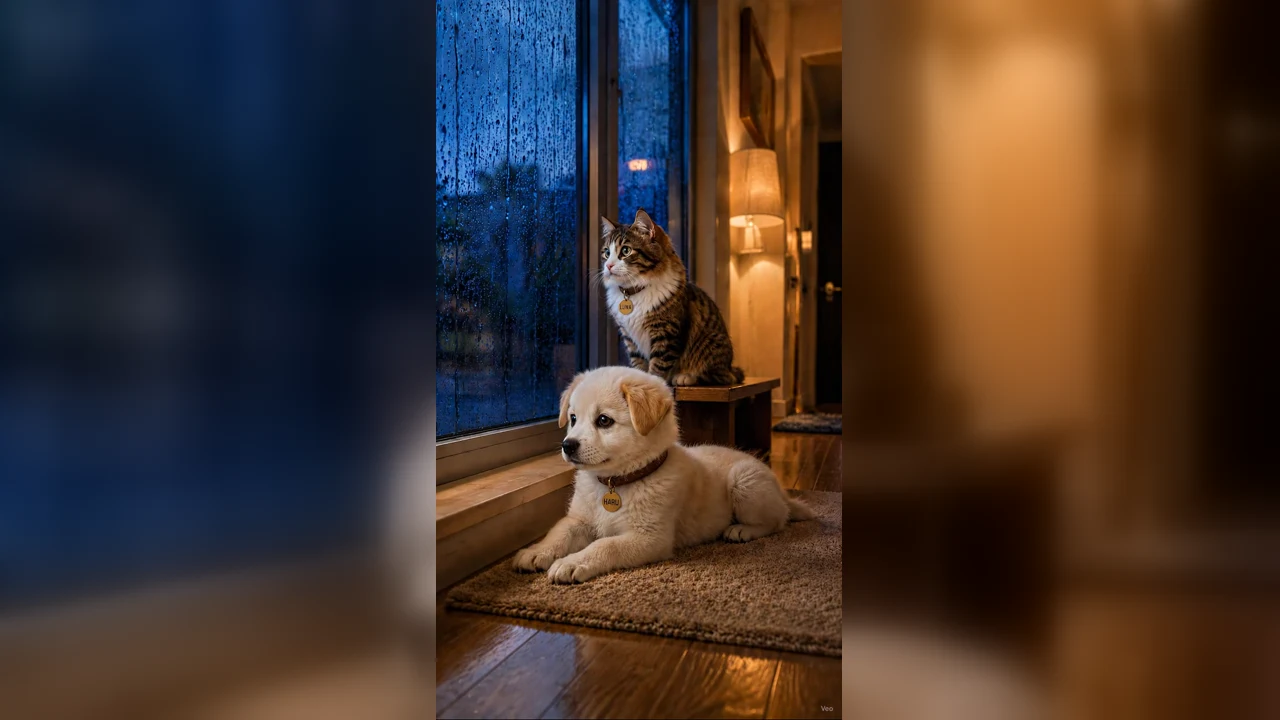
The published HARU and LUNA rainy-window short began with a quiet shared pause, not with a request for impressive movement. The scene needed to introduce both characters, keep the rain outside the window and leave enough visual calm for the original music. That purpose determined the reference frame, camera distance and vertical composition before video generation began.
We use an approved character image or an actual frame from the sequence as visible evidence. For this short, HARU and LUNA had to remain readable together at phone size. We checked their relative scale, face direction, window placement and the open space around their ears and paws. This is the public decision process; the finished character prompts and internal reference system remain private.
FourFeetz production notes
What Went Wrong: Letting One Shot Carry the Whole Story
When a short shot is asked to introduce the room, move two animals, change their expressions and move the camera, every layer can drift at once. Different reaction timing can become synchronized, a paw can lose contact with the floor, or the rainy window can be reconstructed as a different background. A visually polished result is still rejected when those changes weaken the scene connection.
We also avoid choosing a reference only because it is the prettiest image. A close portrait may protect the face but provide no room for the planned action; a wide frame may show the environment but make a name tag or expression unreadable. The correct First Shot is the one that supports the intended edit.
- One scene purpose
- One primary action
- A camera position that can remain stable
- Enough room for ears, paws and the vertical safe area
FourFeetz production notes
What Worked: Reference, One Action, Then Edit
Our stable order is reference approval, scene purpose, one observable action, motion review and final edit. In the rainy-window short, restrained glances and small posture changes gave each character separate timing without turning the moment into a performance. The generated material was judged beside the preceding and following shots, not as an isolated clip.
CapCut was used for selecting usable ranges, trimming starts and endings, arranging the scene order and balancing the original music. Editing can improve rhythm and make a valid transition feel intentional. It cannot restore a changed face, missing paw or broken window geometry, so clips with structural failures do not advance to finishing.
- 1Choose a verified character or sequence reference.
- 2Write the emotional purpose of the scene in one sentence.
- 3Select one primary action and a clear end state.
- 4Compare opening, middle and final frames with the reference.
- 5Place only approved material in the real vertical edit.
FourFeetz production notes
Practical Takeaway: Approve What the Edit Needs
A First Shot is not complete because it looks cinematic. It is complete when it protects the character, makes the planned action physically possible and can connect to the neighboring material. Reviewing at phone size catches different problems from reviewing a full-resolution frame, so FourFeetz uses both views before accepting a scene.
Creators can apply the same method without a private prompt system: define the scene purpose, mark identity details that must remain visible, limit the action and test the result inside the final aspect ratio. The finished short, character pages and production notes provide honest reference points for what survived the process.
FourFeetz scene approval order
| Stage | Question | If it fails |
|---|---|---|
| Reference | Are character identity and scale readable? | Replace or reframe the First Shot |
| Action | Can one movement finish cleanly? | Simplify the action |
| Continuity | Do background and screen direction connect? | Revise the shot or use a clear cut |
| Edit | Does the clip serve the scene purpose? | Do not publish it |
FAQ
Questions creators ask us
Does FourFeetz publish its First Shot prompts?
No. We share the review method and finished evidence, but character-specific master prompts and internal reference systems remain private.
Why choose only one action?
One action makes anatomy, identity and continuity easier to inspect and leaves a cleaner end frame for the edit.