
AI Tool Watch · AI Music
ElevenLabs Music v2 Adds Reference Tracks: Better Sound Control, New Rights Questions
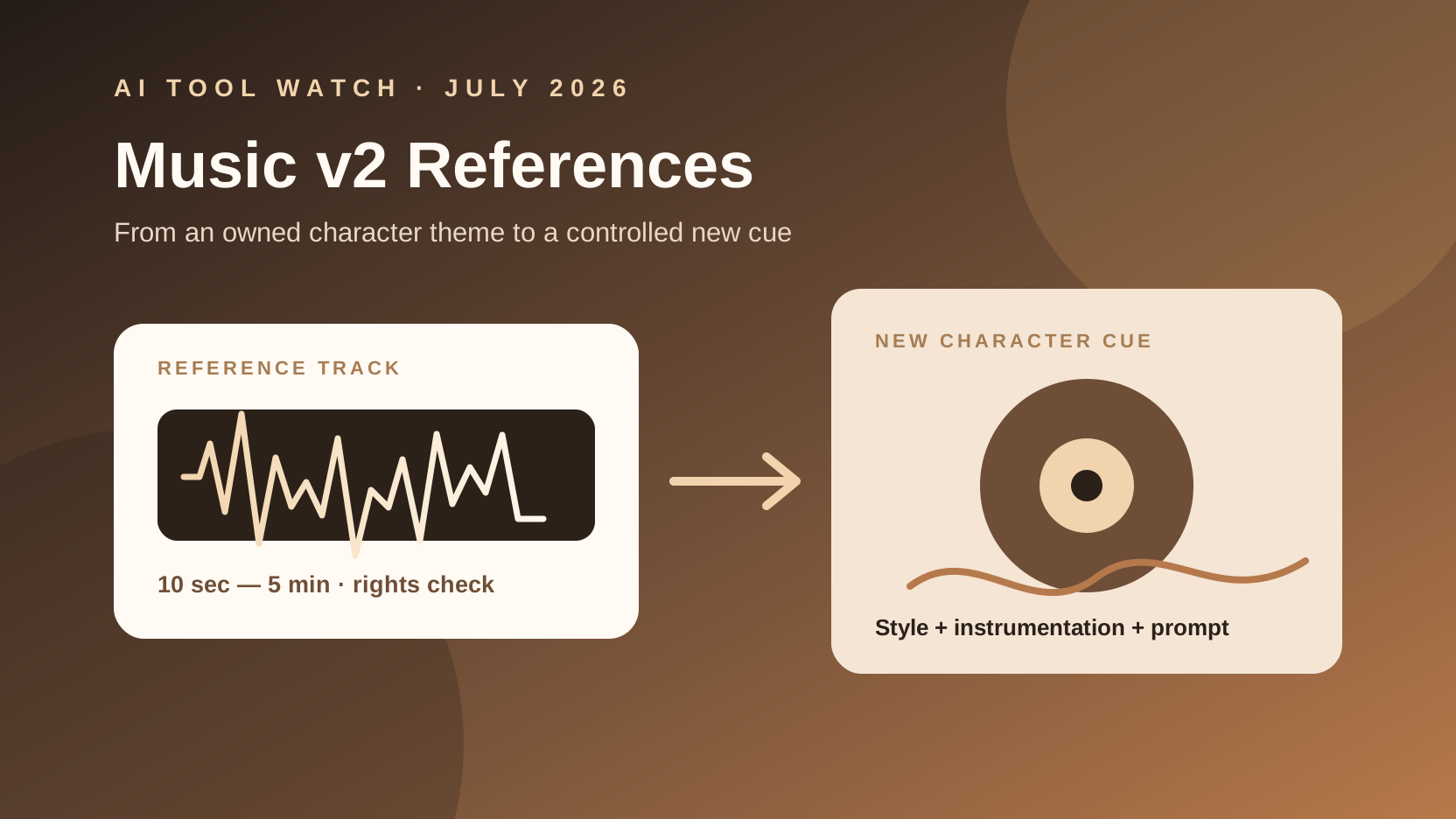
ElevenLabs now lets creators steer Music v2 with an uploaded reference track. We examine the new control surface, its copyright checks and the production tests a character-driven studio should run first.
FourFeetz verdict
Reference-guided music is useful when a team owns a clear sonic identity that text prompts cannot describe reliably. The feature can narrow iteration, but it should not turn a finished commercial song into an unexamined prompt. FourFeetz would begin with studio-owned themes, document every input and compare musical similarity before approving any generated cue.
Primary source
What this article is based on
ElevenLabs · 2026-07-23
Introducing References: sound control for Music v2
Feature claims below are taken from the official announcement. Production implications and cautions are FourFeetz analysis, not claims made by the vendor.
Read official announcement ↗Confirmed in the announcement
What actually shipped or was announced
- Music v2 can use an uploaded track to guide style, instrumentation and overall feel.
- A reference can be combined with a text prompt or used as the primary direction on its own.
- Reference uploads can range from 10 seconds to 5 minutes.
- References is available in ElevenMusic, ElevenCreative and through ElevenAPI.
- ElevenLabs says every uploaded reference passes a copyright check and tracks matching recordings owned by others cannot be used.
Reality check
What the announcement does not prove
- A passed upload check does not by itself establish that every generated result is safe for every market, platform or use.
- Matching the feel of a reference does not guarantee a stable recurring motif, arrangement or mix across multiple generations.
- The announcement does not publish independent measurements for similarity, false positives or false negatives in the copyright check.
- Reference guidance may preserve unwanted production traits such as a crowded mix, weak edit points or frequency conflicts with dialogue.
FourFeetz analysis
Audio References Become a First-Class Input
Text prompts are good at broad direction but weak at describing a precise sonic identity. Words such as warm, playful or cinematic can produce many valid but unrelated arrangements. References adds a real piece of audio to the brief, allowing Music v2 to infer style, instrumentation and feel from something the team can already hear.
That changes the production conversation. Instead of repeatedly expanding a prompt, a studio can begin with an approved internal cue and ask for a new track that follows its musical world while serving a different scene. The reference is an anchor, not a guarantee: structure, melody, pacing and mix still require review.
FourFeetz analysis
The Copyright Check Is a Gate, Not a Rights Opinion
ElevenLabs states that reference uploads are checked against recordings owned by others and that matching tracks cannot be used. The product is explicitly designed around music the uploader has made. That is a useful boundary because it discourages the most obvious attempt to imitate a released recording.
Production teams still need their own provenance record. Keep the source filename, ownership basis, upload date, project, generated outputs and approval decision together. A platform check can control access to a feature; it cannot replace the studio's responsibility to know where an input came from and what permissions apply.
- Use original or fully cleared reference material.
- Do not treat a successful upload as legal clearance for the output.
- Archive the exact reference and the generation brief.
- Review melody, arrangement, vocal character and mix—not only genre labels.
FourFeetz analysis
The Strongest Use Case Is a Controlled Theme Family
Character themes need recognizability without repeating one master track in every scene. A RURU cue might keep light woodwinds, playful pizzicato movement and a shy pause while changing tempo and duration for a short, a menu card or a quiet reveal. A studio-owned RURU theme is a much stronger reference than an unrelated commercial track described as similar.
The right test is whether several outputs feel like one character's musical world while remaining distinct compositions. Reviewers should score motif continuity, instrumentation, edit points, dialogue space, ending behavior and unwanted melodic similarity.
FourFeetz analysis
API Access Makes Provenance More Important
References is also available through ElevenAPI, which makes repeatable generation possible inside a larger media pipeline. Automation should attach the reference asset ID, prompt revision, model version, duration, output checksum and project owner to every result.
The API should stop at a review queue. Automatically generating and publishing multiple variations would amplify both musical drift and rights mistakes. A useful workflow produces traceable candidates; a human still chooses which cue belongs to the story.
FourFeetz analysis
A Practical FourFeetz Evaluation
Start with one studio-owned character theme and create three briefs: a 15-second opening, a 30-second playful middle and a quiet 10-second ending. Run the same briefs once with text only and once with the approved reference attached.
Compare time to first usable cue, motif recognition, editability, unwanted similarity, dialogue space and total generation count. The feature earns a production role only if it improves accepted results without weakening provenance or creative control.
Before adoption
Production checklist
- 1Confirm ownership and permitted use of every uploaded reference.
- 2Archive the exact source audio, prompt and output metadata together.
- 3Compare reference-guided and text-only generations with the same brief.
- 4Review melodic and vocal similarity before commercial use.
- 5Keep publishing behind a named human approval gate.
Related analysis