
FourFeetz Production Guide · Production Guide
How We Reduce Character Inconsistency in AI Videos
A practical review method for keeping character age, size, face and silhouette stable while simplifying action, camera and re-entry.
Production Guides
Quick verdict
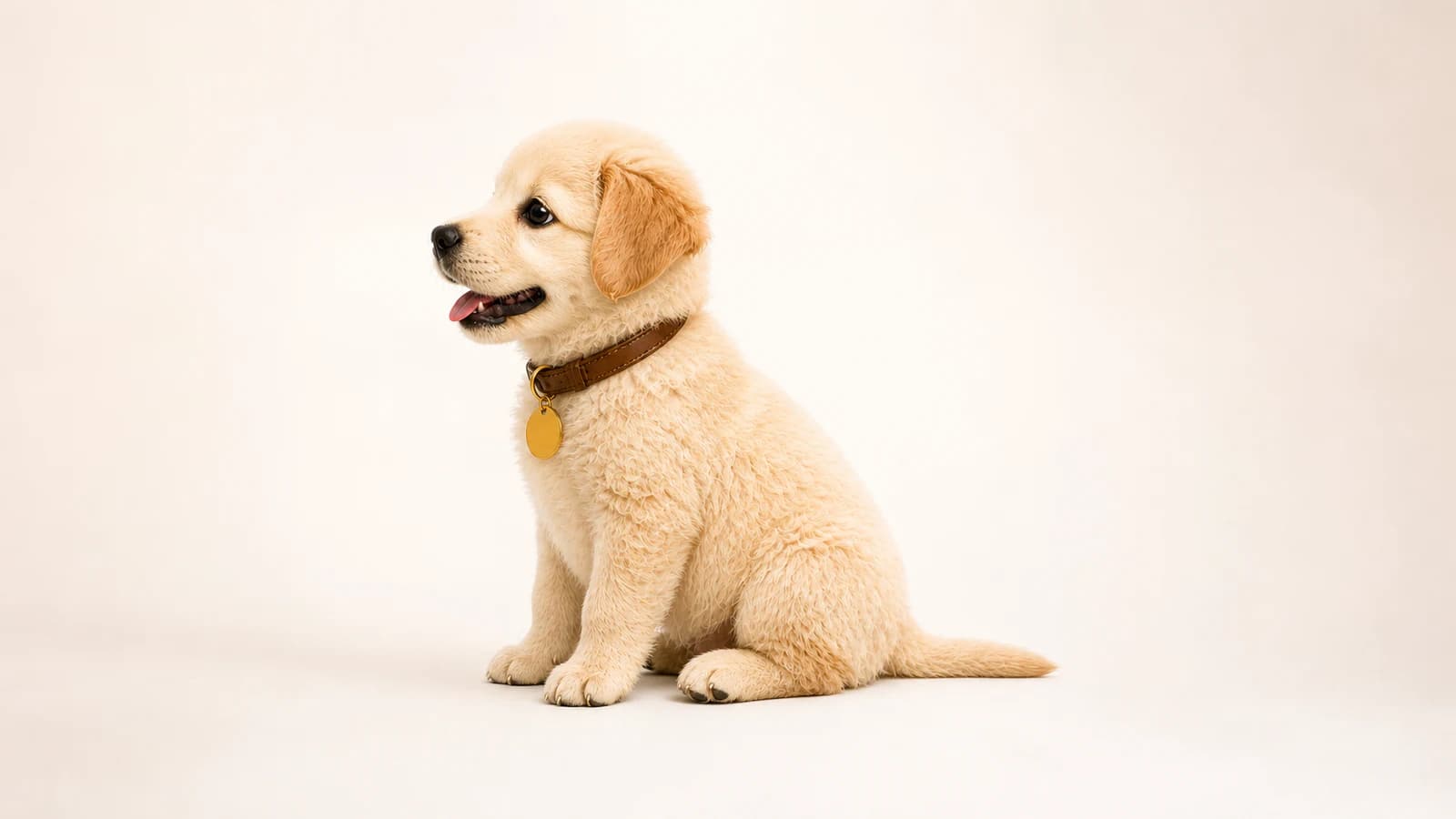
Consistency improves when the shot asks the model to preserve fewer, clearer decisions. One approved reference, one simple action and a stable camera are more useful than adding uncontrolled detail.
FourFeetz production notes
What We Tested: One Clear Reference Purpose
A reference image is useful only when the team knows what it proves. A neutral character image may establish face, ears, proportions and accessories. A cinematic frame may establish lighting and mood. We avoid treating several visually different images as interchangeable evidence inside one shot.
Once a First Shot is approved, FourFeetz keeps the same visible environment and lets the reference carry the appearance decisions. The motion instruction stays concise and describes what the character does next. Repeating new appearance language too aggressively can compete with the evidence already present in the frame and introduce an unintended redesign.
For each generation, we identify the primary public reference and list the visible features that must survive. This guide shares the review principle, not the private prompt or complete character bible used by FourFeetz.
FourFeetz production notes
Protect Age, Size and Face Before Fine Detail
Viewers notice overall age and proportion before tiny texture. We compare head-to-body ratio, eye spacing, muzzle length, ear shape and the character’s scale against nearby objects. A clip can preserve fur color and still make the character look older, taller or like a different individual.
We check the opening, middle and final frames rather than choosing the best still. Identity must survive movement. If a central facial feature changes, we regenerate the shot instead of relying on color grading, sharpening or a fast edit to disguise it.
- Age: head-to-body ratio, facial volume and baseline expression remain stable.
- Size: the character keeps a believable scale against the environment and other characters.
- Face: eye spacing, muzzle, ears and recognizable silhouette do not drift.
FourFeetz production notes
What Worked: Simplify the Action Before Adding Complexity
Every new action asks the generation to solve more anatomy, contact and timing. A walk, turn, jump, prop interaction and expression change inside one clip creates several opportunities for the character to be rebuilt. We divide the sequence into shots with one primary action.
Small secondary movement keeps the result alive: breathing, blinking, a restrained glance or a gentle weight shift. We add complexity only after the simplest version preserves identity. This gives us a clear baseline and makes failures easier to diagnose.
- 1Define one primary action and its final pose.
- 2Generate the stable version with restrained camera and environment.
- 3Add one supporting movement only when it improves the story.
FourFeetz production notes
Hold the Background and Camera Still When Possible
A moving camera changes apparent size, angle, lighting and background geometry at the same time. That can be appropriate, but it makes identity review harder. For continuity-sensitive moments, a locked or gently controlled camera gives the model fewer relationships to reconstruct.
We apply the same principle to the environment. Unnecessary wind, moving objects and shifting light can pull attention away from the character and change fur edges. Once a stable take exists, intentional camera or environmental motion can be tested as a separate production choice.
- Use a stable camera for identity-critical shots.
- Keep background movement subordinate to the character action.
- Change lighting or camera direction only when the story needs it.
FourFeetz production notes
Practical Takeaway: Limit Off-screen Exits and Re-entry
When a character disappears completely, the next frames must reconstruct its face, body and position without continuous visual evidence. We avoid unnecessary exits in shots that must preserve identity and keep at least the most important features visible whenever the composition allows.
If leaving and returning is essential, we often split the moment into separately approved shots and edit them together. The final review checks silhouette, face, age, scale, ears, paws and accessories. A smooth transition is not enough if the returning character is no longer the same.
Reduce reconstruction during the shot
| Production choice | Continuity risk | Safer option |
|---|---|---|
| Full off-screen exit | High | Keep part of the body visible or use a cut |
| Fast orbiting camera | High | Use a stable angle for the identity-critical action |
| One action in a fixed setting | Lower | Review start, middle and final frames |
FAQ
Questions creators ask us
Can a longer prompt guarantee character consistency?
No. Clear references, restrained action, stable staging and systematic review are usually more dependable than adding uncontrolled instructions.
Why compare more than the opening frame?
A character may begin correctly and drift in age, face or scale during motion, especially after turns, occlusion or re-entry.
Should the camera always be locked?
No. Camera movement can serve the story, but a stable camera is a useful baseline when identity is the main production risk.
Continue in the HARU world
All Production Guides →