FourFeetz Creator Knowledge Hub · AI Video
Runway Gen-4.5 Review: HUGO Camera Tests on a Real Production Set
A FourFeetz studio review of Runway Gen-4.5 based on HUGO motion, camera, lighting and editability tests.

Quick verdict
Runway Gen-4.5 Review is useful when it solves a defined production problem. For HARU, the winning method was test body mechanics in a locked frame, approve identity, then add one modest camera action in a separate pass. The tool or technique never replaced direction; it made a specific decision easier to test, compare and approve.
FourFeetz production notes
Introduction
At FourFeetz Studios, controlled motion and camera testing in Runway Gen-4.5 is never treated as an isolated trick. It sits inside the same production chain that shaped HARU: story intention, approved character evidence, shot planning, controlled tests, editorial review, sound, finishing and publishing. Our goal is HUGO's movement stays physically readable and the camera move creates a usable editorial choice. That goal is more useful than a fashionable setting because it tells the team what a successful result must do inside the finished film.
This guide comes from the practical questions we faced while producing and publishing HARU. The hard problem was moving a compact calf through frame without age drift, unstable legs or a camera move that overwhelms the performance. A generic tutorial usually begins with interface controls; we begin with the shot, image or sequence that must survive the edit. That changes the order of work. We define the audience response, identify protected character details and decide how the material will be delivered before we begin testing controlled motion and camera testing in Runway Gen-4.5.
The examples below are intentionally beginner and intermediate. They demonstrate clear briefs, controlled comparisons, camera thinking and review habits without reproducing the proprietary FourFeetz production stack. A creator can use the principles immediately: decide what must remain fixed, state one observable change, review in context and promote only approved work to expensive finishing.
FourFeetz production notes
The Production Question We Were Actually Solving
A production problem should be written as a question with a visible answer. For this guide our question is: can controlled motion and camera testing in Runway Gen-4.5 help us achieve HUGO's movement stays physically readable and the camera move creates a usable editorial choice while keeping HARU recognizable and the sequence editorially coherent? That wording prevents a session from becoming an open-ended search for impressive output. It also gives reviewers a shared standard when several versions look equally polished.
We separate identity facts from shot facts. HARU's pale coat, ear shape, eye spacing, compact puppy proportions and collar are identity evidence. Camera distance, action, environment and light are shot decisions. When those categories are mixed into one vague request, diagnosing a combined walk, turn and orbit produced soft facial geometry, extra leg motion and no stable edit handle becomes difficult. When they are separated, the team can return to the correct layer instead of rewriting everything.
We review the work against the approved HUGO portrait, taped performance mark, start/end framing and neighboring edit beat. A result can be attractive and still fail. The recurring production risk is a combined walk, turn and orbit produced soft facial geometry, extra leg motion and no stable edit handle. We therefore compare small families of variations, change one important variable at a time and write the rejection reason in physical language. This article shares the educational layer of that practice; our master prompts, weighting logic and complete continuity system remain private.
FourFeetz production notes
Real HARU Production Evidence
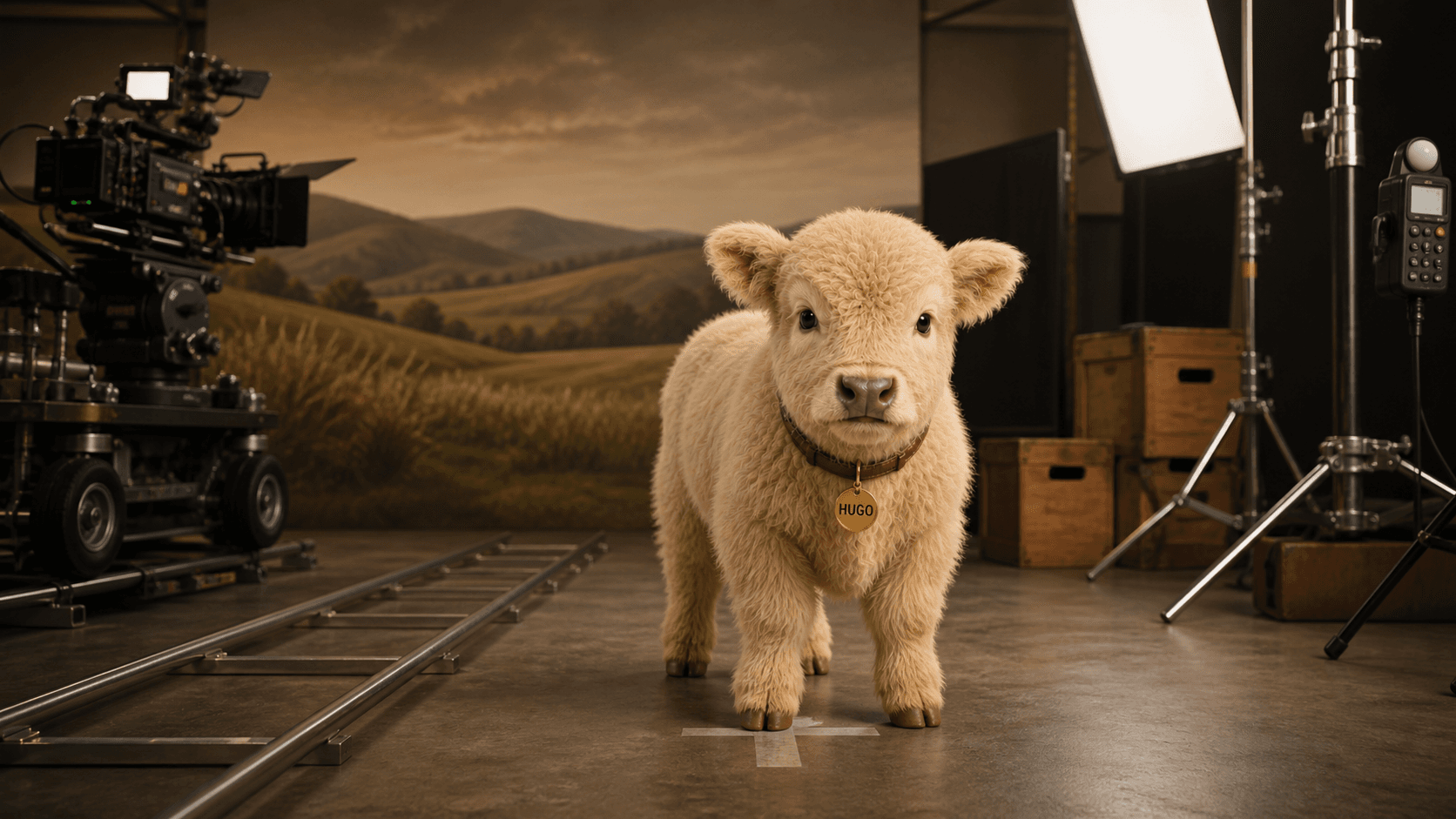
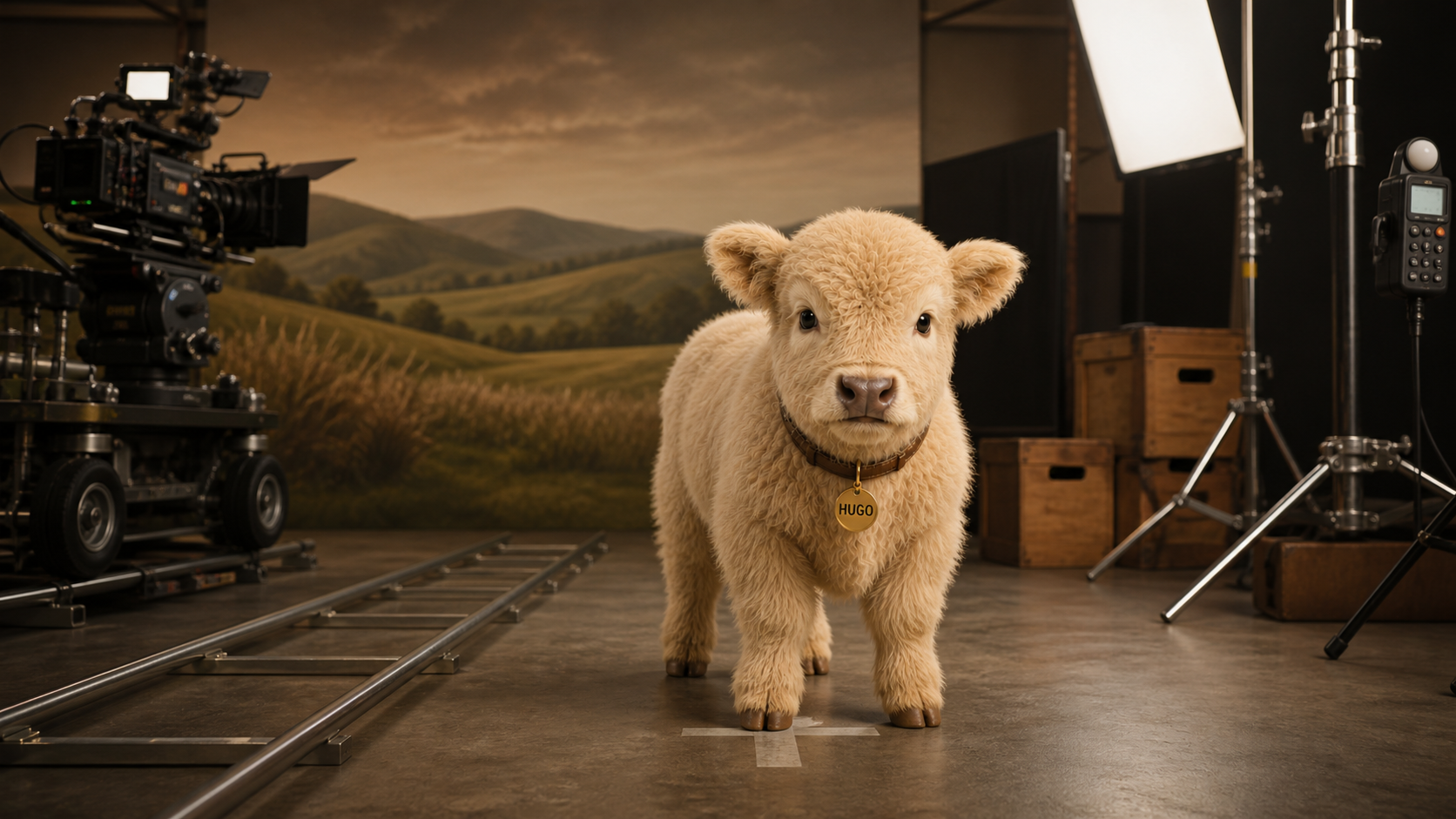
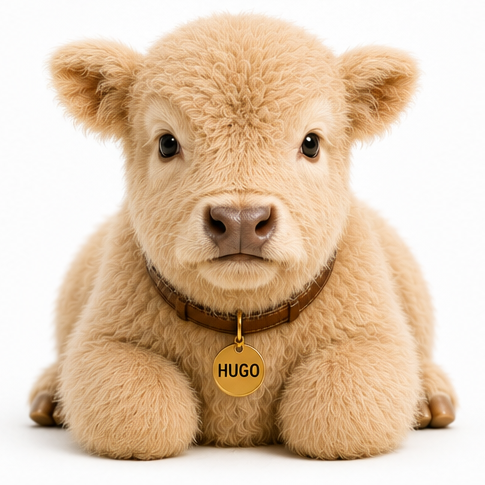
The film frame below is a real FourFeetz HARU production asset, while the second image is the approved identity reference for HUGO. The film frame records what survived the edit; the identity reference records what cannot drift. None is universally best. Each answers a different question, and controlled motion and camera testing in Runway Gen-4.5 must respect the evidence relevant to the current stage.
We inspect large features first because they control recognition at thumbnail size: silhouette, head-to-body ratio, ears and collar. We then inspect face geometry, coat material and color. Finally we inspect behavior. A technically matching image can still feel unlike HARU if the posture becomes aggressive, frantic or overly theatrical. Character consistency is emotional as well as anatomical.
The practical lesson is to label references by purpose. A beautiful cinematic image may hide paws or alter coat color under sunset light. A neutral front view may be visually plain but invaluable when motion begins. Curating three non-conflicting references has repeatedly produced clearer decisions than uploading a folder of loosely related favorites.
FourFeetz production notes
Public Production Ledger: Time, Cost and Settings
FourFeetz separates verified internal records from public planning guidance. For this production pattern, the public time record is public planning block: 2–3 hours for a motion family, camera alternate and edit decision. The clock begins when references and the shot card are approved; open-ended visual exploration is tracked separately because mixing the two makes the workflow look faster than it really is.
Cost is disclosed as a production model rather than a false fixed price: 10–20 short tests are budgeted by accepted seconds; live credit prices must be confirmed before production. Tool plans, credits, model access and regional pricing change, so the live dashboard must be checked before budgeting. Our private invoices and character-specific cost weighting remain confidential.
The recommended public settings are strong first frame; one body action; one camera move; short test duration before hero pass. These are safe beginner-to-intermediate controls, not a master preset. We change one setting only after writing the visible failure it is meant to solve.
Runway Gen-4.5 Review: public production record
| Measure | Public record | Why it matters |
|---|---|---|
| Character focus | HUGO | Prevents every guide from becoming another generic HARU example |
| Time | public planning block: 2–3 hours for a motion family, camera alternate and edit decision | Includes review and edit validation, not only generation |
| Cost | 10–20 short tests are budgeted by accepted seconds; live credit prices must be confirmed before production | Keeps volatile tool pricing honest |
| Acceptance gate | the approved HUGO portrait, taped performance mark, start/end framing and neighboring edit beat | Defines when another attempt is justified |
FourFeetz production notes
Before and After: Identity Reference to Finished Frame
Our before-and-after comparison is not a beauty contest. The before frame tells us what is protected; the after frame tells us whether those facts survived context. In HARU, pale fur must retain texture against a cream environment, the collar must remain readable and the face must carry the same quiet temperament after lighting, composition and motion are introduced.
A strong after frame may deliberately change pose, crop and light. Consistency does not mean freezing the character. It means that change occurs around a stable identity. We compare both frames at full size and as small cards because different defects become visible at different scales. The eye may drift at full size while the silhouette fails only at thumbnail size.
When the after frame fails, we identify the first failing layer. If the source evidence is ambiguous, we repair the reference. If staging hides an anchor, we redesign the shot. If the tool invents an unnecessary feature, we simplify the requested change. This sequence is faster than adding a long negative prompt to a structurally weak setup.
FourFeetz production notes
The Repeatable FourFeetz Workflow
Our public workflow for controlled motion and camera testing in Runway Gen-4.5 has seven gates: intention, evidence, shot or asset card, controlled test, continuity review, edit test and finish. A gate can send the work backward. That is healthy. Returning to an unstable reference is cheaper than repairing ten clips generated from it. Returning to scene planning is cheaper than grading a shot that has no usable cut point.
The asset card uses plain language. It records one purpose, one primary change, protected details, delivery format and a stop condition. The stop condition matters because generative work has no natural end. We stop when the approved result solves the planned problem, not when every possible variation has been seen.
For Runway Gen-4.5 Review, our working method is test body mechanics in a locked frame, approve identity, then add one modest camera action in a separate pass. We generate a small family around one controlled variable, place candidates in the real edit or layout, record the first visible failure and only then decide whether another test is justified. This creates reusable production knowledge instead of an unsearchable folder of outputs.
FourFeetz production notes
Camera and Composition Language
Even when the subject of a guide is not camera movement, camera distance controls the meaning of the material. A wide frame gives HARU a relationship with the world. A medium frame explains action. A close frame asks the audience to read feeling. We choose the audience distance before decorative lens language.
Camera height is especially important with a small animal character. A high human viewpoint can make HARU appear observed or vulnerable; eye-level framing creates companionship; an extreme low angle can introduce a heroic tone that conflicts with a quiet beat. The diagram below is a story diagram, not a menu of fashionable moves.
Composition is also delivery-aware. A frame prepared only for 16:9 may lose the face, action or negative space when used in a vertical short. We protect a central action corridor and capture optional side detail where possible. That discipline makes later reframing an editorial decision instead of an emergency crop.
FourFeetz production notes
Tool and Method Comparison
We do not select a tool by brand loyalty. We select it by production question. Runway, Editing tools, Image tools each interpret references, motion, framing or sound differently. A valid comparison holds the shot purpose and evidence constant, then observes which system creates the lowest continuity burden.
The best-looking single output is not automatically the best production choice. We compare approval rate, time to diagnose failure, edit flexibility, delivery quality and cost per accepted asset. A slower method with predictable revisions can be cheaper than a fast method that produces many unrelated successes.
Tool comparison also includes a manual alternative. Editing, cropping, grading, sound design or rebuilding one reference can solve problems that another generation would amplify. The studio asks for the smallest reliable intervention. That is often less exciting than switching models and more useful to the finished film.
Runway Gen-4.5 Review: production comparison
| Option | Best use | Watch for |
|---|---|---|
| Locked-frame test | Body mechanics and identity | Less cinematic by itself |
| Slow lateral track | Walking coverage | Scale drift if speed is vague |
| Manual edit or crop | Timing repair | Cannot fix broken anatomy |
FourFeetz production notes
Prompt Strategy Without Exposing Master Prompts
Our educational prompt structure has five parts: subject state, environment or source evidence, one observable action or change, camera or composition behavior and light or finish. We use concrete nouns and verbs. Words such as cinematic, premium and emotional are supporting direction, not substitutes for physical description.
We begin with a positive description of the desired result. A long list of feared defects can dominate the request while leaving the intended action vague. If a recurring problem appears, we add one targeted constraint and compare against the previous test. Controlled revision reveals cause; rewriting the entire prompt hides it.
The example below is deliberately safe. It demonstrates order and clarity but excludes the private identity weighting, continuity language, rejection rules and shot-family controls used by FourFeetz. Use it as a learning pattern, not as a promise that one paragraph can replace pre-production.
Educational example · not our proprietary master prompt
HUGO takes one careful step from the taped mark and settles. Low calf-eye camera, slow lateral track only, stable lens behavior, soft key from camera left, preserve cream coat texture and compact calf proportions. Begin and end gently.FourFeetz production notes
Beginner Mistakes and Why They Fail
The first beginner mistake is asking one output to solve an entire sequence. The second is changing reference, camera, action and light after every failure. The third is approving the opening frame without inspecting the middle and end. All three remove the ability to learn from a test.
A subtler mistake is treating consistency as face matching only. HARU can keep the same eyes while body age, coat texture, collar width or temperament changes. Another is finishing too early. Upscaling, sharpening and heavy grading make an incorrect choice more expensive; they do not make it correct.
Finally, beginners often confuse novelty with progress. a combined walk, turn and orbit produced soft facial geometry, extra leg motion and no stable edit handle can hide inside a spectacular image. We ask whether the result belongs in the sequence, supports HUGO's movement stays physically readable and the camera move creates a usable editorial choice and leaves a useful next editorial choice. If not, it is a reference for what not to repeat.
Fast failure diagnosis
| Symptom | Likely cause | First response |
|---|---|---|
| Character drifts | Conflicting evidence or hidden geometry | Simplify staging and references |
| Result feels generic | No concrete production anchor | Restate the approved HUGO portrait, taped performance mark, start/end framing and neighboring edit beat |
| Versions cannot be compared | Too many variables changed | Return to one controlled family |
| Looks good but will not cut | No adjacency or delivery test | Place it in the real sequence |
FourFeetz production notes
Best Practices That Survived Production
Approve evidence before motion or finishing. Write the purpose before the prompt. Keep one primary action or design change per test. Preserve a neutral identity reference beside a cinematic reference. Review candidates in their final aspect ratio and at their expected display size. These practices sound modest because production reliability is usually built from modest decisions repeated consistently.
Name versions by question rather than mood. “Slow push test 02” is more useful than “beautiful final new.” Save the source, tool or method, date, controlled change, result and rejection reason. A usable archive allows a future scene to benefit from today’s failure.
Use review gates. Identity approval, motion approval, continuity approval, edit approval and finishing approval should not collapse into one emotional vote. A reviewer can say that motion passes while identity fails. That precision reduces circular feedback and prevents a strong quality from hiding a weak one.
FourFeetz production notes
How We Review HARU Material
We review normal playback first because the audience experiences time, not contact sheets. We then review slowly to locate deformation, and finally inspect still frames for identity. For images, we reverse the order: silhouette at thumbnail size, identity at normal size and surface detail only after the first two pass.
Every candidate is placed beside neighboring material. Light direction, screen direction, apparent lens distance, color temperature and emotional energy must connect. A shot may be individually excellent and still be rejected because it repeats a camera idea or raises the energy too early.
The review note identifies the first meaningful failure. We avoid exhaustive criticism of work that has already failed a gate. This keeps feedback actionable and protects time. If a combined walk, turn and orbit produced soft facial geometry, extra leg motion and no stable edit handle is the first visible problem, that becomes the next test question; we do not simultaneously redesign every other layer.
FourFeetz production notes
Editing, Sound and Finishing
The edit decides whether controlled motion and camera testing in Runway Gen-4.5 was successful. We test material with temporary music, room tone and neighboring shots before promoting it. Sound can give generated movement weight, hide a visual transition or reveal that a dramatic camera move competes with the intended quiet rhythm.
Color finishing unifies exposure, contrast and HARU's coat tone across tools. Pale fur can become yellow under aggressive warmth or lose texture under bright cream backgrounds. We protect separation around the face and use the environment, rather than artificial outlines, to maintain readability.
Finishing is intentionally late. We upscale only approved material, clean only defects the audience can see and export against a delivery checklist. A technically perfect master is wasted if the crop, caption, thumbnail or metadata fails at publication.
FourFeetz production notes
Publishing Across Website, Film and Shorts
Every approved asset enters a publishing system: descriptive filename, alt text, caption, article relationship, film relationship and delivery variants. The website uses the full frame as evidence and editorial context; a short may use a tighter action crop; social posts need a clear first-frame read. These are separate compositions derived from one production decision.
We preserve canonical article URLs and connect guides through shared tags, tools and characters. That makes knowledge discoverable beyond launch week. A creator reading about controlled motion and camera testing in Runway Gen-4.5 should be able to continue into the HARU film, character page, related music and the next production guide without returning to a generic menu.
Accessibility is part of quality. Captions, readable contrast, stable layouts and useful alternative text help audiences and search systems understand the work. We do not stuff keywords into captions; we describe what the image contributes to the production lesson.
FourFeetz production notes
FourFeetz Experience Notes
Our most reliable sessions began with an approved frame, a one-sentence purpose and a modest request. Our least reliable sessions began with several references, several actions and the hope that the system would discover the film. The difference was not prompt length. It was production clarity.
We learned to protect quietness. Tools naturally offer more motion, more atmosphere and more spectacle. HARU often needs less: a held gaze, one step, a slow shift in light or a small musical pause. Restraint is not a limitation imposed by technology; it is part of the character's direction.
We also learned when to stop. Once HUGO's movement stays physically readable and the camera move creates a usable editorial choice, further variations can weaken confidence and consume the time reserved for editing. A professional workflow does not maximize generations. It maximizes the proportion of work that reaches the audience in coherent form.
FourFeetz production notes
Final Review
Runway Gen-4.5 Review belongs in a creator knowledge hub because it connects technique to consequence. The essential method is test body mechanics in a locked frame, approve identity, then add one modest camera action in a separate pass. Everything else—model choice, interface setting, prompt wording and finishing option—should serve that method rather than replace it.
For HARU, success means the audience meets the same observant, warm and quietly brave character from frame to frame. controlled motion and camera testing in Runway Gen-4.5 is valuable when it protects that feeling while solving moving a compact calf through frame without age drift, unstable legs or a camera move that overwhelms the performance. It fails when the technique becomes more visible than the story.
Begin with one approved reference, one production question and one measurable change. Review against the approved HUGO portrait, taped performance mark, start/end framing and neighboring edit beat, cut the result into context and write down what happened. That small loop is the public foundation of the FourFeetz approach. The advanced system remains private, but the discipline is available to every creator.
FAQ
Questions creators ask us
How did FourFeetz use Runway Gen-4.5 Review for HARU?
We used it to solve moving a compact calf through frame without age drift, unstable legs or a camera move that overwhelms the performance, then reviewed the result against identity, continuity, editability and delivery requirements.
Does this guide include the FourFeetz master prompts?
No. It includes beginner and intermediate educational patterns while protecting proprietary prompts and advanced continuity methods.
What should a beginner test first?
Start with one approved HARU-style reference, one visible change and a locked delivery format. Review against the approved HUGO portrait, taped performance mark, start/end framing and neighboring edit beat before adding complexity.
How do I know when the result is finished?
Stop when the result achieves HUGO's movement stays physically readable and the camera move creates a usable editorial choice, passes the edit or layout test and introduces no meaningful continuity failure.